What villain actually had a good point?
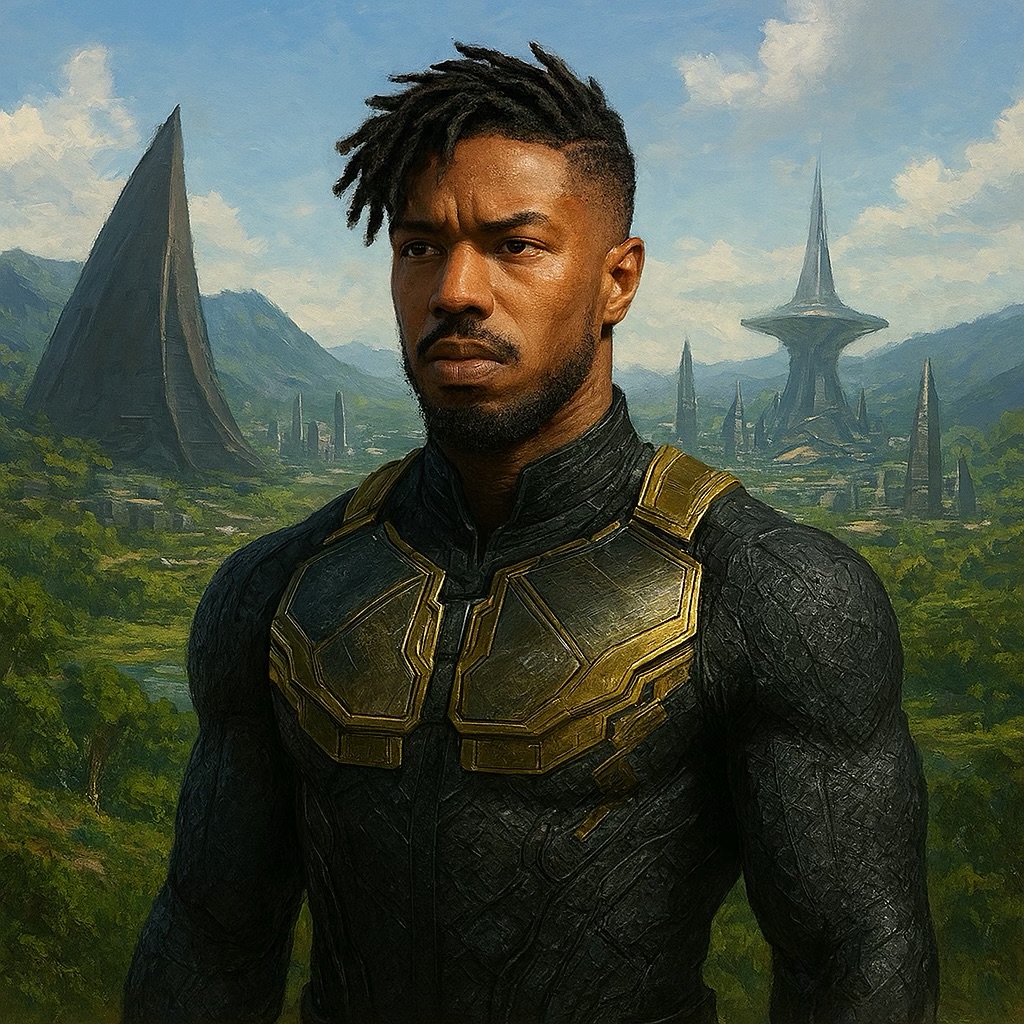
Every great villain needs a reason. Not an excuse — a reason. The best ones don’t see themselves as villains at all; they see themselves as the only person willing to say the thing everyone else is too comfortable to admit. Few characters embody that better than Erik Killmonger in Black Panther.
The Isolationist Kingdom
Wakanda, as the film presents it, is a marvel — a nation centuries ahead of the rest of the world in technology, resources, and culture, all hidden behind a holographic illusion of poverty. For generations, Wakanda’s kings made a calculated choice: stay hidden, stay safe, stay untouched by the wars and exploitation that reshaped the rest of the African continent.
It’s a choice built on self-preservation. And on paper, it’s worked. Wakanda has never been colonized, never been stripped of its resources, never had its people scattered or enslaved.
But that safety came at a cost that the film doesn’t shy away from naming: Wakanda watched. It had the power to intervene — in famines, in wars, in the transatlantic slave trade itself — and it chose isolation instead.
Vibranium could have changed the world. Instead, it stayed buried under a technologically advanced illusion of a farming village.
Killmonger’s Indictment
Killmonger arrives not as an outsider, but as a lost son of Wakanda — raised in Oakland, shaped by the very world his father’s homeland refused to engage with. His argument isn’t abstract geopolitics; it’s personal. He grew up watching a version of the Black diaspora that Wakanda never had to endure: poverty, violence, systemic neglect. All while, unbeknownst to him for years, a hidden nation with god-level technology sat by, protecting its own comfort.
His plan — arming oppressed people around the world with Wakandan weapons to seize power by force — is where the film draws its clearest moral line. Conquest and violence aren’t offered as the answer. But his diagnosis of the problem is never really refuted. T’Challa doesn’t argue that Killmonger is wrong about Wakanda’s failure. He argues that Killmonger’s solution would only multiply the harm.
The Turn
What makes Black Panther more than a typical hero-versus-villain story is that it lets Killmonger’s critique land — and then lets it change the hero. By the film’s end, T’Challa doesn’t return to isolationism. He opens Wakanda to the world, starting with outreach centers in Oakland, the very neighborhood that shaped his cousin’s rage. The king doesn’t defeat Killmonger’s argument so much as absorb the truth of it and discard the poison in its method.
That’s a rare thing in a blockbuster: a villain whose defeat doesn’t erase his point, but ratifies it.
Why It Resonates
Killmonger works because his grievance isn’t invented for the plot — it echoes real, unresolved tension around wealth, power, and who gets protected versus who gets left behind. The film doesn’t ask us to agree with his methods. It asks us to sit with the discomfort of a villain who forces the hero — and the audience — to ask what our own version of Wakanda’s walls might be.
The best villains don’t just oppose the hero. They reveal what the hero, and the world around him, has been avoiding.



 Vicki M Taylor
Leave a comment