What’s a book you think deserves a sequel?
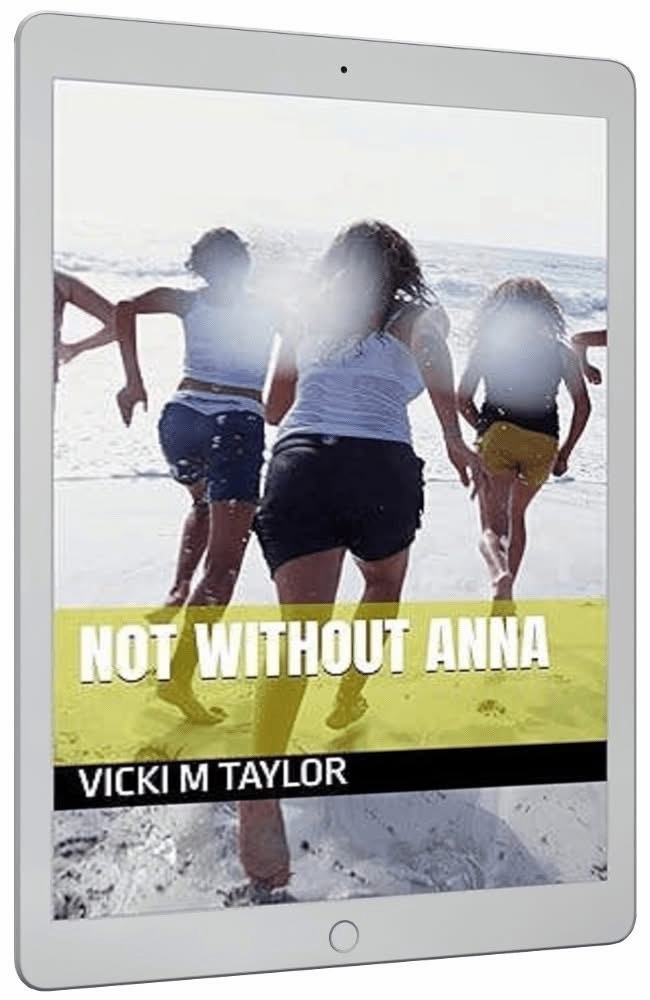
People ask me sometimes which of my books deserves a sequel. I understand the question—it’s the kind readers ask when a story has done its job and left them wanting more. But my answer usually surprises them, because the book I think about most isn’t one I’ll ever continue. It’s Not Without Anna.
I’ve never been a writer who believes every loose thread needs tying off. I’d rather leave a little mystery, a little “what if,” folded into the last page like a note the reader finds later, in their own time. That’s why I write epilogues instead of sequels. An epilogue answers just enough—closes the door partway, without slamming it shut on everything that might still be moving on the other side.
Not Without Anna is built around a community waking up to something it had been avoiding: children who were struggling, and not being seen. The heart of the book is the reckoning—parents finally stepping forward, a community finally responding, people finally doing the hard, uncomfortable work of paying attention to kids who’d been quietly signaling for help in all the ways children do when no one’s looking. By the time the story reaches its epilogue, the adults have changed. The structures around the children have changed. That was always the story I set out to tell.
But here’s the “what if” I left folded into that ending, the one I never answered outright: did the teenagers change too?
Because that’s a different question than whether the adults did. Grown-ups can rearrange a whole system—new rules, new attention, new safety nets—and still not know, not really, whether the young people inside that system trust it yet. Whether they’ve let their guard down. Whether the very kids the book is about have found their own way forward, or whether they’re still circling the same old survival habits, just watched more closely now.
I gave the epilogue only a hint of that answer, and I did it on purpose. Because I think the truest ending to that particular story doesn’t belong to me anymore once the last page turns—it belongs to whoever’s read it. A parent reading Not Without Anna carries that unanswered question straight into their own house, their own children, their own community. A teacher carries it into a classroom. A teenager who recognizes themselves in Anna or in the kids around her carries it somewhere I can’t follow and shouldn’t try to.
If I wrote the sequel, I’d have to decide. I’d have to choose whether those teenagers grew into their better selves or slid back into old patterns, and either way, I’d be taking something away from the reader—the work of imagining it themselves, of measuring it against kids they actually know.
So no, I won’t write it. But I’ll tell you what I believe, quietly, off the page: I think some of them made it. I think a few didn’t, not right away. I think most of them are somewhere in between, the way most of us are, circling back toward the light in fits and starts. Scripture never promises a straight line out of struggle—only that we’re not asked to walk it alone. “Two are better than one, because they have a good return for their labor: If either of them falls down, one can help the other up” (Ecclesiastes 4:9-10). That, to me, is the real ending of Not Without Anna—not what happened to the teenagers, but the fact that, finally, someone was there to help them up.
That’s the sequel I’d rather you write in your own heart than the one I’d write on a page.

 Vicki M Taylor
Leave a comment