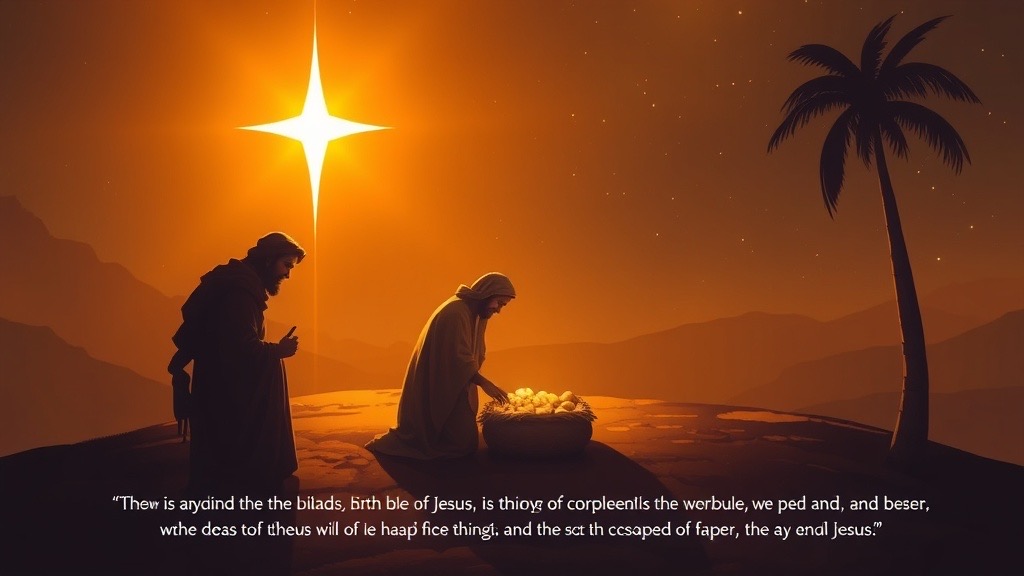
The night air in Bethlehem carried the scent of olive wood fires and the distant bleating of sheep settling into their folds. Mary steadied herself against the rough stone wall of the stable, her breath coming in measured intervals as another wave of pain passed through her. Joseph knelt beside her, his carpenter’s hands gentle but uncertain, meant for shaping wood and driving nails, not for this sacred mystery unfolding before him.
The journey from Nazareth had been long. Three days on foot, with Mary riding their borrowed donkey when the road grew too difficult. They’d arrived in Bethlehem to find every door closed, every room claimed by other families who’d come for Caesar’s census. Joseph had pleaded with innkeeper after innkeeper until finally one had gestured toward the stone shelter behind his house where the animals took refuge from winter’s chill.
Now, as midnight approached, Mary’s time had come.
The ox in the corner shifted, its dark eyes watchful. The donkey that had carried Mary stood patient and still. Joseph had swept the floor clean and laid out their few traveling blankets, preparing as best he could a place for the child who’d been promised by angels, spoken of by prophets, awaited by generations.
When the baby finally came into the world, he did not cry out immediately. For a moment, Joseph’s heart stopped. Then came the sound—soft at first, then stronger—the cry of new life. Mary reached for her son with trembling hands, drawing him to her breast, and in that instant, the stable seemed to fill with a light that had nothing to do with their single oil lamp.
Joseph wrapped the infant in strips of clean linen they’d brought from Nazareth, swaddling him carefully, securely. When he looked at Mary’s face, he saw exhaustion, yes, but also something else—a profound peace, a knowing. This child, so small and vulnerable in the lamplight, was the one the angel Gabriel had spoken of. Emmanuel. God with us.
Mary laid the baby in the manger Joseph had lined with fresh hay, the feeding trough becoming a cradle. The child’s eyes were dark and searching in the dim light, his tiny fists curling and uncurling. He was so ordinary in his smallness, and yet they both knew—nothing about this night was ordinary.
Outside, the town of Bethlehem slept, unaware. But on the hillsides beyond the walls, shepherds were lifting their faces to an impossible sky, suddenly ablaze with angels singing glory. They would come soon, these rough men who smelled of wool and weather, falling to their knees before the manger, their weathered faces transformed by wonder.
In the stable, Joseph sat beside Mary and the child, keeping watch through those first hours. The animals breathed their warm, steady breath into the cold air. Mary sang softly, an old song her mother had taught her, her voice wrapping around the infant like another blanket.
The days that followed brought an unexpected rhythm to their humble shelter. The shepherds came and went, spreading word of what they’d seen and heard. Neighbors brought food, curious about the young family and the strange stories being told about them. Mary and Joseph remained in Bethlehem, waiting for her strength to return before attempting the journey home.
Then, weeks later, strangers appeared at the door.
They came on camels, these travelers from distant lands, their robes rich with embroidered patterns, their faces marked by long exposure to desert sun and wind. Three men, learned and wealthy, who had followed a star across mountains and wilderness, through bandit country and foreign kingdoms, driven by ancient prophecies and celestial signs they’d studied in scrolls older than memory.
The first was Melchior, eldest of the three, his beard white as winter frost. He carried himself with the bearing of one accustomed to royal courts, yet when he entered the humble dwelling where Mary and Joseph now stayed, he removed his ornate turban and bowed low. The second was Caspar, younger, his skin dark as polished cedar, his eyes bright with intelligence and wonder. The third was Balthazar, quiet and contemplative, who carried their gifts with reverent care.
They had stopped first at Herod’s palace in Jerusalem, these magi, asking after the newborn King of the Jews. The question had troubled Herod, who knew nothing of such a birth and liked it even less. He’d sent them onward to Bethlehem with instructions to return and tell him where this child could be found. But the wise men, looking now upon the baby in Mary’s arms, knew with sudden certainty that Herod’s interest was not born of worship.
“We have seen his star,” Melchior said, his voice thick with emotion as he knelt before the child. “We have traveled far to pay him homage.”
One by one, they presented their gifts. Melchior opened an intricately carved box and withdrew a portion of gold—not coins, but pure beaten gold, worth a fortune, fit for a king. He placed it at Mary’s feet, his weathered hands trembling slightly.
Caspar brought forth frankincense, the precious resin used in temple worship, its sweet smoke rising to heaven in prayers and offerings. The fragrance filled the room as he laid it before the child—an acknowledgment of divinity, of priesthood, of one who would bridge the gap between earth and heaven.
Balthazar’s gift was myrrh, the aromatic resin used in burial preparations, its bitter scent mingling with the frankincense. As he placed it with the other gifts, Mary felt a shadow pass over her heart. She understood, in that moment, that this child born to her would also die for her, for all of them. The gift spoke of suffering to come, of a body that would be broken, of love that would cost everything.
The wise men stayed only briefly. They spoke of their journey, of the star that had led them unerringly across desert and mountain, of the prophecies they’d studied in lands far from Israel. They looked with wonder at the ordinary child who slept and woke and nursed like any baby, yet who had called them across the world.
Before they left, Balthazar pulled Joseph aside. “We were warned in a dream,” he said quietly. “Do not return to Herod. He seeks the child’s life. And you—you must flee. Take the mother and child to Egypt. Stay there until it is safe.”
Joseph felt ice run through his veins. Egypt. So far. But as he looked at the gold the magi had brought, he understood. This wasn’t just a gift of honor. This was provision for a journey, for survival in a foreign land, for the protection of the promised King.
That night, after the wise men had departed by another route, Joseph woke Mary. “We must go,” he said. “Now, tonight. An angel came to me in a dream, just as Balthazar warned. Herod will search for the child to destroy him.”
Mary looked down at her sleeping son, at the gifts piled nearby—gold for a king, frankincense for a priest, myrrh for one who would die. She gathered him close, wrapped him warm against the night air, and nodded.
As they slipped out of Bethlehem under cover of darkness, the star that had guided the magi still blazed overhead, now lighting their path toward Egypt, toward safety, toward an uncertain future. Behind them, they left the stable where heaven had touched earth, where shepherds and kings alike had knelt before a baby in a manger.
This was the first Christmas—a night of joy and wonder, yes, but also of sacrifice and flight, of gifts given and costs counted, of a love so vast it would span from a manger to a cross, from Bethlehem to the ends of the earth and back again.
The baby slept in his mother’s arms as the donkey carried them south, and Joseph walked beside them, the weight of gold in his pack and the weight of responsibility on his shoulders. They were refugees now, this holy family, fleeing violence, seeking shelter in a foreign land.
And heaven went with them into exile, as it always would, as close as a mother’s heartbeat, as near as a father’s watchful eyes, as present as the very breath of God made flesh, wrapped in swaddling clothes, cradled against the dark.
The End


 Vicki M Taylor
Leave a comment